
Bringing History to Life
This site is devoted to the identification, preservation, publicizing, and study of ephemeral publications that provide more-nuanced pictures of American culture and life. Because intended to aid scholars as well as collectors, this site focuses on artifacts preserving obscure information and imagery. (It excludes already-familiar ephemera such as posters, labels, famous comic books, and most cards).
The main feature of this site is a gallery of images chosen for their aesthetic and/or documentary value. Different items are spotlighted from week to week. All items posted are in my collection–unless they have been already donated to institutions. Feel free to borrow images from this site, so long as you use the credit line ephemerastudies.org. Please let me know if you do use one of these images. Scholars seeking certain kinds of publications or images can email me at , and I may be able to help.
THIS SITE NOW PRESENTS OVER 500 IMAGES. PLEASE CLICK ON THE GALLERY LINK ABOVE TO SEE EARLIER POSTINGS. CLICK ON THE PAGE NUMBERS ON THE RIGHT, ABOVE THE IMAGES, TO NAVIGATE THE GALLERY.
image of the week
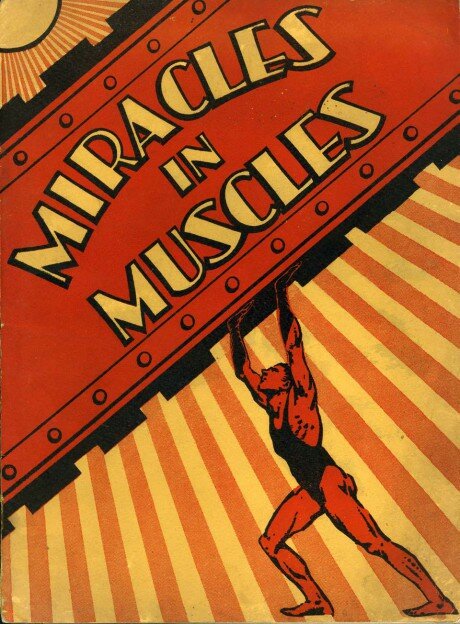
Miracles in Muscles
Titus