
| Title |
Why Futuristic Designs Keep Bombing: 1936 |
| Category |
| Booklet, Uncategorized |
| Date |
1936 |
| Why It's Interesting |
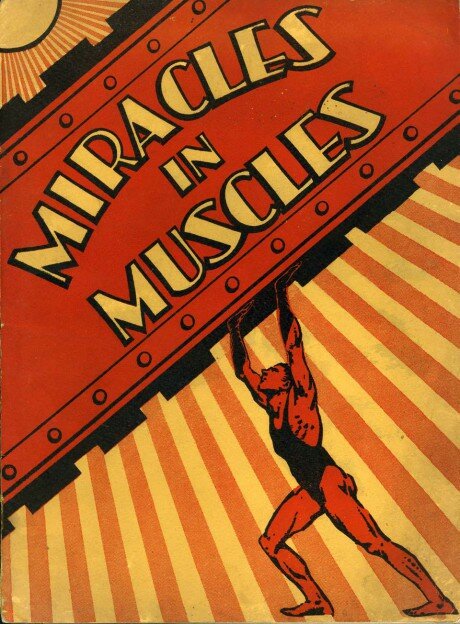
Moderne styling promised a bright and clean future, an escape from the misery and dreariness of Depression, through new technologies. This phenomenon got a strong boost at the Century of Progress Exposition in Chicago in 1933/34 and peaked at the New York World’s Fair of 1939/40. It provided the basic look of such favorite attractions at the latter fair as General Motor’s Futurama and General Electric’s Carousel of Progress. These displays showed the same faith in clean lines inspiring clean life as one found in the futuristic drawings of Antonio St. Elia in the teens and Le Corbusier, who proposed to tear down all of Paris to usher in utopia. The Futurama and Carousel designs were so ideal [and unrealistic] that GM could use its panorama, practically unchanged, at the New York World’s Fair of 1964/65, and Disney transplanted the Carousel to Tomorrowland at both Disneyland and Disney World. I saw the Futurama in 1965 and did not dream then [age 13] that this recycled 1930s design. Why are most futuristic designs so ridiculous [and I choose this word carefully]? Simply stated, futurists ignore practicalities and human nature: these are too messy for their tastes. The ephemera that I collect and post are chosen so as to show how diverse and complex life is and the range of human motivations: including so many that seem distasteful–or simply inconvenient–for experts of all kinds to even contemplate. The evidence of ephemeral material makes it clear that people will never behave in the simplistic, idealized fashions that futurists–usually proclaimed friends of the people–posit and prescribe for them. Whether Marx, Edward Bellamy, Francis Galton, or B. F. Skinner, those who would remake society in their own image could do no more than rally idealists and opportunists unhappy with the sloppy complexity of human society. They then blame those too practical to believe that one size [or idea] fits all so they need not acknowledge the folly of their own simpleminded idee fixe. This booklet was issued by Bond Bread in connection with a radio program that it sponsored. |
This website seeks to encourage researchers and collectors to discover and study obscure ephemera that document American culture and life. Worldcat reveals that most of the items that I post cannot be found in more than a few research libraries–often none at all. Alternately, research libraries do not bother to catalog ephemeral publications like these. I believe, however, that because these were distributed free, or at nominal cost, to consumers, they were the publications most likely to make their way into homes and be read by large numbers of Americans.
I acquire pre-1960 examples of the kinds of publications that prove so useful when scholars study 19th-Century America. The limited competition that I encounter for them suggests that libraries, which could easily outbid me, have little interest in post-Civil War and 20th-century ephemeral publications in general.
I try to anticipate what materials future historians will find useful. Being an historian first and a collector second, I organized this website to encourage others to do this too—even if this means new competition for me. I am aware that I could be wrong in prizing particular ephemera or even whole classes of ephemera. I may even be wrong to encourage scholars to study obscure ephemeral publications; these may be obscure for good reason.
Ephemerastudies.org will permit me to share with others the information and imagery that I am acquiring, and to benefit from the knowledge, intelligence and experience of other scholars and collectors. Please contact me with your impressions of the site.